
Thyroid Care WITHOUT Surgery: RFA and the Future of Thyroid Cancer Treatment
SAVE YOUR THYROID with Jennifer Holkem

If you’ve been diagnosed with thyroid cancer, you might think a total thyroidectomy is your only option. For years, that was the standard approach, followed by a lifetime of monitoring. But what if the future of thyroid cancer care involved less surgery, not more? What if we could treat cancer with pinpoint accuracy, avoid unnecessary operations, and monitor for recurrence with a simple blood test?
In a recent episode of the Save Your Thyroid podcast, I sat down with Dr. James Suliburk and Dr. Ray Grogan, endocrine surgery innovators from a major academic medical center, Baylor Medicine, in Houston, TX. These experts are on the cutting edge of a revolution in thyroid care, using advanced technology to offer options that were considered impossible just a few years ago.
This conversation opens a door to the future of thyroid treatment. Let's dive in.
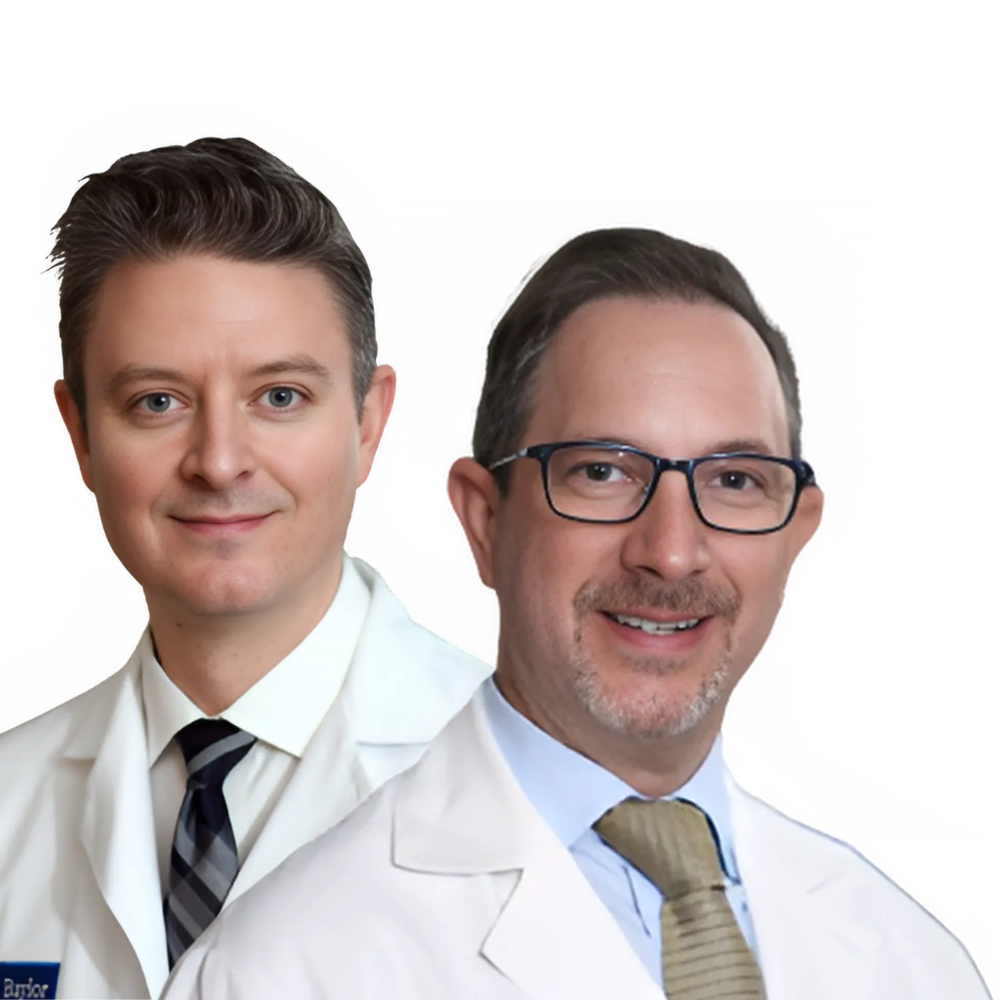
Meet the Innovators: Dr. Ray Grogan & Dr. James Suliburk
Dr. Ray Grogan and Dr. James Suliburk are leading endocrine surgeons and researchers at Baylor College of Medicine, in the heart of the Texas Medical Center. They are at the forefront of developing and implementing less invasive and non-surgical treatments for thyroid disease.
What sets them apart is their commitment to pushing the envelope of what’s possible. Their work is not just about adopting new technologies, but about fundamentally rethinking the goals of thyroid care. They are pioneering the use of advanced tools like Radiofrequency Ablation (RFA) for cancers, molecular testing to prevent unnecessary surgery, and cutting-edge blood tests to monitor patients who decide to keep their thyroids. Their work represents the next frontier in a truly patient-centered approach to treatment.
🎧What You’ll Learn in This Episode:
RFA is a safe and effective option for certain papillary thyroid cancers.
Patient demand is a major driver of innovation in healthcare.
Molecular testing can solve the "indeterminate" biopsy problem and help you avoid surgery.
Circulating Tumor DNA testing may be the future of monitoring cancer recurrence before it becomes visible on ultrasound.
The future of non-surgical care may include treating Graves' Disease.
Shared decision-making is key when multiple treatment options are available.
The "learning curve" for surgeons is real, and finding an experienced team is crucial.
AI and 3D imaging are making diagnostics and procedures more precise than ever.
The safety of active surveillance provides the foundation for less invasive cancer treatments.
Watch this episode on YouTube, or download for offline viewing on YouTube Music!
Click the thumbnail above to watch on YouTube!
Save Your Thyroid with Jennifer Holkem is now available on more podcast platforms!
Visit my new podcast website, SaveYourThyroidwithJen.com!
What is this podcast and blog all about?
To my subscribers, welcome back! If you’re new, welcome to Save Your Thyroid with Jennifer Holkem, a podcast and blog all about thyroid nodules. For the past 6 years, I have advocated for fellow patients suffering with this very common condition.
Thyroid nodules impact 70% of adults in their lifetime, and the standard of care is surgical removal of half or all of the gland. But in recent years, safe and effective non-surgical treatment options have become available.
In this podcast and blog, I sit down with patients and physicians to discuss life with thyroid nodules, treatment options, and how to save the thyroid whenever possible.
Why is the Standard of Care for Thyroid Cancer Changing?
For decades, the standard approach to thyroid cancer was aggressive. But why are top surgeons now advocating for less invasive options? The answer is rooted in data and a better understanding of the disease.
"The reason why surgeons that treat a lot of thyroid cancer are open to the idea of RFA...stems back to data that we have from Japan over the last decade," Dr. Grogan explains.
This data, from studies on Active Surveillance, showed that many small papillary thyroid cancers are incredibly slow-growing ("indolent"). In fact, when simply monitored with ultrasound, only about 10-12% of them grew enough to require surgery over a 10-year period. This proven safety of "watchful waiting" provided the logical and ethical foundation for a new question: if we don't have to operate, could we treat it with something less invasive, like RFA?
The Advanced Tools of Modern Thyroid Care
This new, less-invasive approach is powered by a suite of advanced technologies that are giving patients more options and better outcomes.
Radiofrequency Ablation (RFA) for Cancer
RFA is no longer just for benign nodules. For carefully selected patients with small papillary thyroid cancers and some indeterminate nodules, this procedure uses targeted heat to destroy the nodular cells, preserving the thyroid gland and avoiding the risks of surgery.
Molecular Testing
What happens when a biopsy comes back "indeterminate"—that frustrating gray area where it’s not clearly benign or cancerous? This happens in about 20% of cases. Molecular testing analyzes the biopsy cells for specific genetic mutations, helping to clarify the risk of cancer and, in many cases, allowing patients to safely avoid a diagnostic surgery.
Circulating Tumor DNA (ctDNA): The Next Frontier
One of the biggest hurdles for thyroid-preserving treatments has been monitoring for recurrence. The traditional blood marker, thyroglobulin, only works if the entire thyroid is removed. Dr. Suliburk and Dr. Grogan are pioneering the use of circulating tumor DNA—a revolutionary blood test that looks for the unique DNA of the cancer itself. This allows for precise monitoring even if you keep your thyroid, offering true peace of mind.
Pushing the Envelope: What's Next for Non-Surgical Care?
The innovation doesn’t stop here. The doctors are actively looking toward the future, exploring questions like:
Can we treat slightly larger cancers with RFA?
Could ablation be a viable treatment for complex conditions like Graves' Disease?
How can Artificial Intelligence (AI) and real-time 3D imaging make these procedures even more precise?
This is the cutting edge of medicine, where the goal is to continually find better, safer, and less invasive ways to care for patients.
🎧 Listen Now!
Thyroid Care WITHOUT Surgery: RFA and the Future of Thyroid Cancer Treatment
Chapters
00:00 Introduction to Thyroid Radiofrequency Ablation
06:21 Adoption of RFA in the US
17:06 Patient Demand and Shared Decision Making
20:30 RFA for Papillary Thyroid Cancer: A New Approach
28:58 Advancements in Molecular Testing for Thyroid Cancer
31:03 Circulating Tumor DNA: A New Frontier
36:36 Criteria for RFA in Papillary Thyroid Cancer
43:35 The Complexity of Randomized Controlled Trials
49:30 Future Directions in Non-Surgical Thyroid Care
🎧 Listen to the full episode on your favorite podcast platform or at SaveYourThyroidWithJen.com
Your Thyroid, Your Choice
The most powerful message from this conversation is one of empowerment. The world of thyroid cancer treatment is evolving. You have more choices than ever before, and your personal goals for your health and quality of life are a valid and essential part of the decision-making process. If you've been told a total thyroidectomy is your only option, it may be time to seek a second opinion from a high-volume expert at a major academic center.
Thank you to the sponsor of this episode, Cambridge Interventional.
Cambridge Interventional, a US-based company, has decades of experience in development, manufacturing, and sales of RFA and other medical devices. Radiofrequency ablation is a nonsurgical, minimally invasive, thermal ablation procedure used to treat various tumors, including thyroid nodules. If you have followed this blog for very long, you probably know that I personally underwent thyroid RFA treatment for a very large thyroid nodule and was able to avoid surgery and save my thyroid. If you’d like to learn more about Cambridge Interventional, please visit their website CambridgeInterventional.com. A big thanks goes out to Cambridge Interventional for helping physicians to save thyroids, and also for supporting this channel by sponsoring this episode.
👉Learn more about Cambridge Interventional
Learn more about Dr. Raymon Grogan and Dr. James Suliburk:
https://www.bcm.edu/healthcare/specialties/endocrinology/endocrine-surgery
Please consider supporting my work. Every donation is sincerely appreciated!
Find a physician, explore treatment options, and join our patient community here:
Disclaimer: None of the statements made in this or any other blog/video by "Its me Jen again" should be considered medical advice.
The goal of this podcast and blog
I seek to provide data, resources, and expert opinions on the topic of thyroid nodules, and make it accessible to patients. When I was first looking for thermal ablation treatment, everything that I read was physician-facing material. It was very hard for me to understand. This material is meant to help patients understand what's going on in their thyroid gland and what an important gland it is. If you can keep your thyroid intact, that's going to help you live a longer, healthier life, and preserve your quality of life. Thanks for reading this far today! — Jen